
Maryland · Online Data Privacy Act
Run MODPA — the strictest of the state privacy acts
Maryland broke from the template. Data minimization is a hard limit that consent cannot cure, selling sensitive data is prohibited outright, and minors get protections no other state matched. AccessPoint runs the regime as written.
Maryland — MODPA at a glance
- Rights deadline
- 45 days, extendable once by a further 45 days on notice
- Appeal
- An internal appeal of a refusal, answered within the statutory window
- Minimization
- Collection limited to what is reasonably necessary — consent does not cure an excess
- Sensitive data
- Sale prohibited; processing limited to what is strictly necessary
- Minors
- Heightened protections on targeted advertising and sale
- Languages
- English
Built for Maryland — MODPA
One platform for the whole access-and-privacy mandate, pre-configured for this regime and running in your own Microsoft 365 tenant.
Minimization as a hard limit
Most state acts let consent unlock additional collection. Maryland does not — collection must be reasonably necessary and proportionate to the specific product or service requested, whatever the consumer agrees to. That makes the recorded justification for each purpose the central artefact.
Sensitive data, not for sale
MODPA prohibits selling sensitive data outright rather than gating it behind consent. Record what categories you hold, why, and on what basis — so the prohibition is evidenced rather than assumed.
Minors' protections
Maryland extended protections to minors well beyond the other state acts. Record the age-related determinations and the controls applied where processing touches young people.
Rights and appeals
Access, deletion, correction, portability, and opt-outs on the 45-day clock, with a refusal appealable internally and the appeal tracked as its own stage.
Data protection assessments
Run assessments for higher-risk processing as full cases — questionnaire, risks with owners, mitigations, and a dated sign-off an Attorney General inquiry can read.
In your own tenant
Consumer personal information stays inside your own Microsoft 365 and Azure tenant — no third-party privacy cloud holding the very data the requests are about.
Consent is not a cure
Maryland removed the escape hatch every other state left open.
The state privacy acts mostly follow a bargain: collect what you disclose, and where the processing is sensitive, get consent. Maryland changed the terms. Under MODPA, collection must be limited to what is reasonably necessary and proportionate to the specific product or service the consumer requested — and consent does not unlock more. Sensitive data may not be sold at all, and processing of it is confined to what is strictly necessary. For organizations whose compliance programs are built around consent flows and disclosure notices, this is a different question entirely: not what did you tell people, but what did you decide you needed, and can you show the reasoning. AccessPoint records purposes, data categories, and the justification behind them in a register, and links each to the assessment that approved it.
Configured out of the box
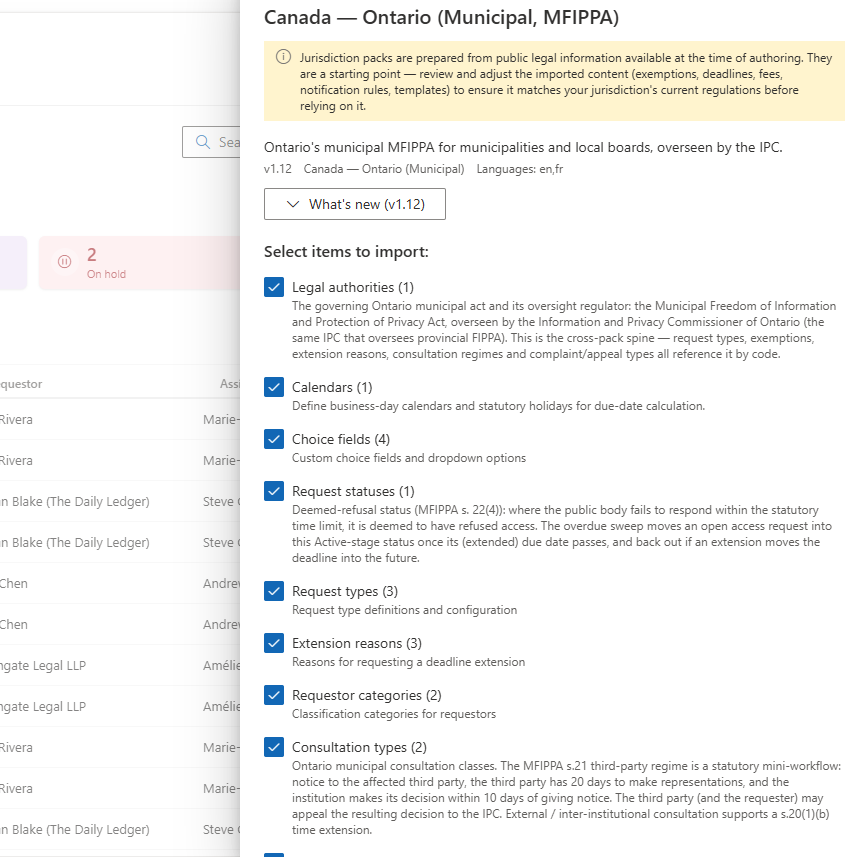
Installing the us-md-mmdpa jurisdiction pack seeds your tenant with everything this regime needs. It is a starting point built from public information about the legislation, not legal advice — your legal counsel validates and adjusts it for your tenant.
Pack content last reviewed: 2026-08-10
Related guide: FOI Workflow Quick Check- MODPA as the legal-authority spine
- The 45-day rights clock with its single 45-day extension and the appeal stage
- Request types for access, deletion, correction, portability, and the opt-out rights
- A purpose and data-category register carrying the necessity and proportionality justification
- Sensitive-data handling with the sale prohibition and strict-necessity limits recorded
- Minors' processing determinations and the heightened controls applied
- Data protection assessments for targeted advertising, sale, sensitive data, and profiling
- Refusal grounds cited on the response, with Attorney General complaint information on a denied appeal
Maryland — MODPA Questions
What makes MODPA stricter than the other state acts?
Can we run MODPA alongside the other state acts?
How does AccessPoint evidence data minimization?
Where does consumer personal information reside?
Go deeper
Flat annual pricing, published in full. Every feature in every size — access requests, privacy impact assessments, breach response, complaints, video & audio redaction, and AI Assist. No per-user or per-module fees.
- Under 500 employees$2,990/yr
- 500–2,000 employees$7,990/yr
- Over 2,000 employees$14,990/yr
Run MODPA in Your Own Tenant
Try AccessPoint free for 30 days, configured for Maryland's online data privacy regime. No credit card required.